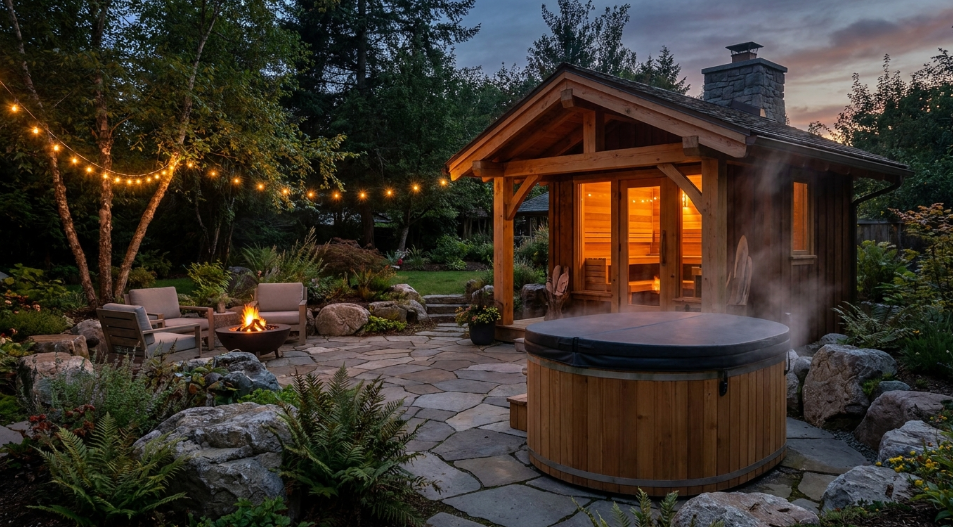
A fully installed barrel sauna typically runs $5,500 to $9,000 for a 6-foot diameter unit built for two or three people, and $9,000 to $16,000 for a 7 to 8-foot diameter unit built for five or six. The shell and heater together usually account for 55 to 65 percent of that total. The rest goes to electrical work, a skid or pad foundation, and delivery, which for a barrel often costs more than for a flat-panel cabin because the unit typically arrives pre-assembled and heavy.
Step 1: Price the Barrel Shell
Start with the bare shell price, staves, hoops, roof, and door, without a heater bundled in unless the listing says so explicitly. A 6-foot diameter shell from an established maker generally runs $3,200 to $5,500. Stepping up to 7 or 8 feet in diameter, or adding length for extra bench seating, pushes the shell price to $5,000 to $9,000 depending on wood species and hoop finish. Cedar shells run toward the top of each range; heat-treated hemlock shells generally land 15 to 25 percent lower for a comparable size.
Step 2: Price the Heater
Heaters for a round barrel are sized the same way as any sauna heater, by cubic footage, and typically run $700 to $2,000 depending on kilowatt rating and whether it includes a digital control panel. A 6-foot diameter barrel usually needs 4.5 to 6 kilowatts; an 8-foot diameter unit needs 7.5 to 9 kilowatts. Wood-fired heaters, an option some barrel makers still offer, cost less upfront in many cases but add ongoing wood costs and require a chimney pass-through built into the roof, which is a different installation step than an electric heater’s wiring requirement.
Step 3: Price the Electrical Circuit
Electric heaters above roughly 6 kilowatts need a dedicated 240-volt circuit, and the cost depends almost entirely on distance from the main panel. A short run to a barrel placed near the house might cost $300 to $700; a run to a barrel positioned farther out in the yard, especially one requiring trenching under a lawn or path, can run $1,200 to $2,500 or more. Getting a firm electrician’s quote before ordering the barrel keeps this line item from becoming a surprise once the shell is already on site.
Step 3a: Do Not Skip Permit Costs
Many jurisdictions require a permit for a new dedicated circuit, and some require one for an outdoor structure above a certain footprint even without a permanent foundation. Permit fees are typically modest on their own, often $50 to $250, but they add time to a project timeline that buyers rarely plan for when they assume a barrel will be running within a week of delivery. Skipping a required permit is not a real savings either, since an uninspected circuit can complicate a home insurance claim later and can require costly rework if the property is sold before the work gets properly documented.
Step 4: Price the Foundation or Skid Base
Most barrel saunas rest on a pair of pressure-treated skids or runners rather than a poured slab, since the curved floor needs consistent support along its length rather than a flat surface underneath the whole footprint. Skid materials and basic leveling typically run $200 to $600 in a DIY setup, or $800 to $1,800 if a contractor grades and levels the site professionally. Skipping proper leveling is a common shortcut that causes uneven door gaps and stress on the hoops within the first year or two.
Step 5: Price Delivery
Because most barrel saunas ship pre-assembled in one or two large sections, delivery costs more on average than a flat-packed cabin that breaks down into manageable panels. Standard curbside delivery with a liftgate truck typically runs $150 to $500 depending on distance from the manufacturer. Sites with a narrow access path, a steep driveway, or no room for a delivery truck to get close may need a crane or a smaller specialty carrier, which can add $500 to $1,500 to the project. Confirming the delivery vehicle’s turning and access needs before ordering avoids a same-day surprise when the truck cannot reach the site.
Step 6: Price Ongoing Costs
Electricity for regular use runs roughly $18 to $45 a month depending on session frequency and local rates, slightly higher than a comparable cabin sauna since a barrel’s curved roof has marginally more surface area to lose heat through than a flat one of similar floor space. Add sealant reapplication for the exterior staves every one to two years and periodic hoop tension checks, both specific to barrel construction rather than flat-panel cabins. Shoppers who want to compare bundled shell-and-heater pricing against buying components separately can see the full lineup alongside other specialty retailers before finalizing a budget.
Step 7: Price Optional Upgrades
Stainless or powder-coated hoops instead of bare mild steel typically add $150 to $400 to a shell’s price but avoid the surface rust that shows up on unprotected hoops within a wet season or two. A peaked roof instead of a flat slant top, where offered as an option on the same model, usually adds $200 to $500 but sheds rain and snow more reliably over the unit’s life. Upgrading from heat-treated hemlock to cedar staves adds roughly 20 to 35 percent to the shell price. None of these upgrades are required to get a working barrel sauna, but pricing them out before ordering avoids discovering mid-build that a wanted feature was never actually included in the base quote.
What Does the Research Say About Cost Versus Actual Use?
How much a barrel sauna costs matters less for health outcomes than how consistently it gets used. A large Finnish cohort study associated four to seven sessions a week with lower rates of fatal cardiovascular events compared with once-weekly use, and a review in The American Journal of Medicine described similar cardiovascular associations tied to regular sauna bathing generally, independent of unit price or size. That points toward budgeting for a barrel sauna that fits a routine someone will actually keep up several times a week, not necessarily the largest or most expensive shell a budget allows.
Frequently Asked Questions
What does a 6-foot barrel sauna cost fully installed? Expect $5,500 to $9,000 total, including the shell, heater, electrical work, and a skid foundation.
Is delivery more expensive for a barrel sauna than a cabin sauna? Often yes, since barrel saunas typically ship pre-assembled in large sections rather than flat panels, which can require a liftgate truck or crane depending on site access.
Do barrel saunas need a poured concrete foundation? Not usually. Most rest on pressure-treated skids or runners rather than a slab, though the ground still needs to be level and well-drained.
How much does a barrel sauna cost to run monthly? Roughly $18 to $45 in electricity for regular use, depending on session frequency, local rates, and heater size.
References
- Association between sauna bathing and fatal cardiovascular and all-cause mortality events, JAMA Internal Medicine, 2015
- Benefits and risks of sauna bathing, The American Journal of Medicine, 2001
- Clinical Effects of Regular Dry Sauna Bathing: A Systematic Review, Evidence-Based Complementary and Alternative Medicine, 2018